
From requirements to evaluation
Turn images into useful observations.
Define the detection task
Start with the operational question: what should be detected, counted or classified, and what action follows? Agree the meaning of a useful result, including the consequences of missed detections and false alarms. Identify the images and annotations needed to evaluate the task.
Design for the real image
Lighting, visibility, movement and camera placement affect what a vision system can observe. Consider optics and installation alongside image processing. Evaluation data should reflect the variation expected in use, rather than relying only on clear demonstration images.
Put processing where it is needed
Edge AI brings image processing close to the camera. Discuss computing resources, power, network capacity and response time, then decide what to process locally and what to send to other systems. Keep image evidence and metadata available for review where the workflow requires it.
Applied expertise
Underwater detection in context
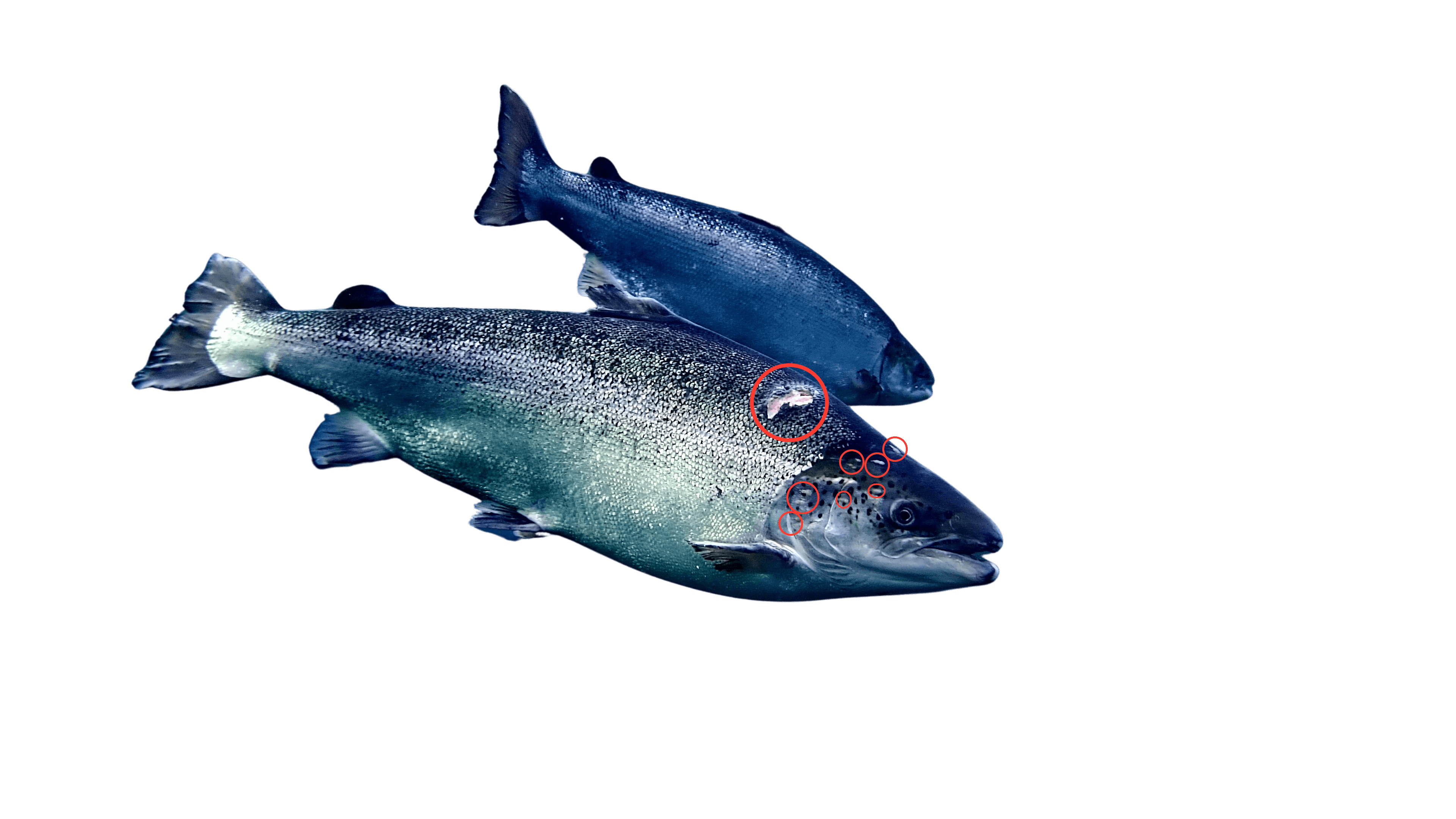
Detect lice and feed pellets in underwater video to support monitoring and feeding decisions. Performance depends on camera configuration and imaging conditions; we evaluate suitability for your application. Fish-health monitoring is available on the underwater imaging platform. Supported models and configuration are selected for your application. Net-integrity and mortality monitoring are planned features and are not yet available. The underwater instrument, algae sensor and SeaCom 1.6 modem are commercially available. Contact Velox Aqua to discuss supported configurations and delivery timing for your application.
Explore Aqua’s pellet detection